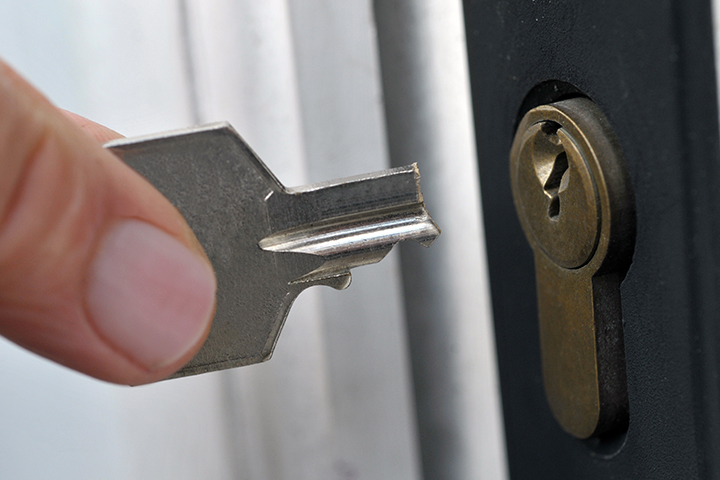
It’s a situation we all dread – you’re going about your day, about to unlock your door when, with an ominous click, you have a broken key in your lock. Or worse, you break your key as a result of desperation when the door won’t lock, and now you have to leave your home open and vulnerable. Fortunately, this guide explains exactly how to get a snapped key out of a lock.
We’ll walk you through:
- Why Your Key Might Have Broken In The Lock
- The First Step
- 4 Methods To Get A Snapped Key Out Of A Lock
- Deciding Whether You Need To Replace
- Key Takeaways (Pun Intended)
Why Do Keys Break In Locks?
A snapping key can feel sudden, but in reality, the causes are usually a combination of gradual wear and tear, minor lock neglect, or even just using too much force. Understanding why it happens can help prevent it from happening again.
1. Weakening Over Time
Despite their appearance, most keys – especially standard household ones – are made from softer metals like brass or nickel silver. This serves a good purpose: namely, to make it easier to precisely cut and shape the key. However, it also means that these materials are more prone to wear. Over time, everyday use (and misuse – opening packages, scraping tape, we see you!) can weaken them, making them vulnerable to snapping with even the slightest level of resistance.
2. Ill-Maintained Or Faulty Locking Mechanism
It’s not always down to the key. A poorly installed or maintained locking mechanism can increase the level of resistance within the system. If your key feels stiff or ‘gritty’ when it’s turning, it’s probably time to give your lock some much-needed TLC.
Lock cylinders should be lubricated at least once a year using a graphite-based lubricant (not oil, which can attract more debris and block the mechanism). Skipping this bit of maintenance can cause the internal components to seize or wear unevenly, making it harder for your key to turn smoothly and, therefore, increasing the chances of it snapping.
3. Using Too Much Force
It’s instinct really – when a key won’t turn, the urge is to wiggle it harder or apply more pressure. Unfortunately, that’s often the exact moment you’ll hear the dreaded snap. Rather, if your key isn’t turning:
- Stop and don’t force it.
- Check you’re using the right key.
- Try a spare key to rule out damage.
- Check the door alignment.
- Carry out lock maintenance.
First Things First: Don’t Panic
If your key has just snapped in the lock, take a moment – it’s frustrating, but relatively simple to fix. Rushing or reacting out of panic can make things much worse.
Do not try to insert the rest of the key into the lock as you’ll push the snapped piece further inside, making it much harder to reach and likely causing even more damage along the way. Most removal methods rely on the broken part being as close to the surface as possible, so the shallower you can keep the broken key, the easier your job will be.

4 Methods: How To Remove A Snapped Key From A Lock
The method depends on numerous factors, including the location of the lock, how deep the broken piece is, and what tools you have available. But before exploring exactly how to remove a broken key from a lock, here are a few things you might want to keep nearby.
Tools That’ll Come In Handy
- Lubricant (ideally graphite spray).
- Thin-nosed pliers.
- Tweezers.
- Jigsaw or mini hacksaw blade.
- Superglue.
- Rag or paper towel (to catch lubricant drips).
- In a pinch: bobby pins, safety pins or paper clips.
Prepare: Assess The Position and Apply Lubricant
Take a close look at the damage. If you can still see or touch the broken piece of key inside the keyhole, then good news: you’re likely to be able to remove it with basic tools. If the break is flush or deeper into the lock, you’ll need to use a tool that can slide in beside the key to hook it out.
Whichever situation you find yourself in, one of the simplest but most important steps is to lubricate the lock before attempting removal of the key. Doing so will reduce internal friction and give you a much better chance of success. Ideally, use a graphite spray which is dry and won’t block up the mechanism. If WD40 or another oil-based lubricant is all you have, it can work temporarily for this purpose – but be cautious and scarce about it.
Make sure to aim the nozzle directly into the keyway and keep a rag or tissue on hand to catch any excess drips. Graphite spray, in particular, can stain surfaces, so take care during application and follow the manufacturer’s instructions.
Method 1: Try Using Tweezers Or Pliers
If a small part of the broken key is sticking out of the lock, tweezers or thin-nosed pliers might be all you need to get the job done. Gently clamp around the exposed key and pull straight out, applying even pressure. Be very careful to avoid pushing the piece further in.
Many people find that household tweezers or pliers are too wide to get a proper grip, so if it’s not working, don’t force it – use a different method instead.
Method 2: Try The Blade Method
Similarly, for keys that have snapped inside the lock but aren’t too far in, a small metal blade – such as that from a jigsaw or mini hacksaw – can be incredibly effective, especially if it has serrated edges. You’ll want to grab some protective gloves for this one!
Break the blade into a smaller piece if necessary and then insert it carefully into the keyway alongside the broken key. If the blade has teeth, position it in such a way that the serrations face toward you. This way, when you turn and pull gently, the blade can hook into the edge of the broken key and help pull it free. This method can take a good few attempts, so be patient and don’t rush it.
Method 3: Use A Key Extractor Tool
If you happen to have access to a key extractor tool (or can borrow one), this is the method professionals favour. These tools are specifically designed to grip and remove broken keys from inside locks.
Insert the extractor tool into the keyway along the biting edge of the key (the side with the cuts), then twist and pull carefully. Different extractor tools use different hook shapes, so it can take a few tries to find the right technique.
Whilst it’s a particularly effective technique, if you’re thinking about buying a set just for this job, it might be more economical and reliable to call a locksmith instead.
Method 4: The Superglue Trick (A Last Resort)
This method may sound a bit unconventional, but it can work in certain circumstances, provided that the broken piece is still slightly visible.
Apply a very small amount of superglue to a longer object, such as a matchstick or piece of wire, and then gently press it to the exposed edge of the key. Hold it in place until the glue sets and then try pulling the key out with the makeshift handle slowly and steadily. Be careful not to let the glue drip into the mechanism itself, as this could cause an even bigger issue.
Still Not Budging? When To Stop
If none of these methods are working, or if the key fragment is too far inside to reach, it’s time to step back. Continuing to poke and prod can damage internal components – turning a relatively minor issue into a full replacement job.
In this case, your best bet is to call a local locksmith. Most will be able to remove the broken key quickly using the right tools, and if the lock is damaged, they can also repair or replace it on the spot.
Don’t Forget: Keep Both Halves
If you’re successful – congratulations! Just one more thing. Once the broken key is out, make sure you keep both pieces, even if they look useless. Locksmiths and key-cutting shops can often create a new key using the broken pieces as a template, making the replacement process quicker, cheaper, and more accurate than cutting a new key from scratch or rekeying the entire lock.
Do You Need To Replace The Lock?
After successfully removing a snapped key, many people are tempted to move on and forget all about it. But here’s the hard truth: if a key has broken inside your lock, there’s often a deeper issue, especially if it’s a recurring problem.
It’s worth asking yourself: has the lock been sticking for a while? Does the door need a shove to lock properly? Do I have to get my key in at a very specific angle? These are all signs that the internal mechanism is worn, misaligned, or generally in need of some work.
Even if there isn’t a persistent issue at play, the process of removing the broken piece may have caused damage. Tools inserted into the lock can shift or bend delicate internal components, especially if removal was attempted yourself. Ultimately, this can compromise the smooth operation and even the security integrity of the lock.
For peace of mind and ongoing security, it’s often better (and cheaper than you might think) to replace the lock, especially if it’s an older model anyway, i.e., one without any anti-snap or anti-pick protection.
Choosing The Right Replacement
If you do decide to replace the lock, make sure you opt for a model that is both user-friendly and uncompromising on security standards. Especially if you’re a landlord or letting agent, it’s essential that your locks comply with insurance requirements and provide modern security features. Factors to consider include:
- Security ratings – Look for locks that meet the BS3621 British Standard, which many insurance companies require.
- Lock Type – Whether it’s a Euro cylinder, mortice lock, night latch, or a combination, check your chosen lock is appropriate for your door type.
- Anti-Snap Protection – Especially for uPVC doors, be sure to fit anti-snap cylinders: research has shown that nearly 1 in 3 UK burglaries involve lock snapping.
Still unsure? Our guide on the most secure front door locks breaks down some of the best options for every type of home.
Key Takeaways: How To Get A Snapped Key Out Of A Lock
A snapped key in a lock doesn’t have to feel like a disaster. With the right approach, the right tools, and a sprinkling of patience, many broken key incidents can be resolved quickly.
Remember: stay calm, avoid forcing anything, and try one of the proven removal techniques we’ve covered in this guide. If it’s not working, reach out to an expert for help. At The York Locksmith Company, we offer fast and reliable help with broken key removal, lock repairs, and replacements. Get in touch, and we’ll see what we can do.