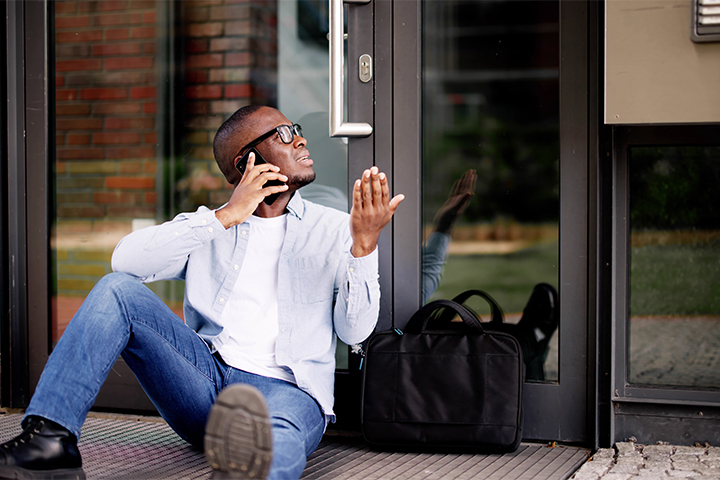
“Arghhhhh, I’ve been locked outside of my house. Send help!”
Before your panic goes into overdrive, know that you’re not alone. In fact, it’s fairly common to get locked out of your home, with as many as 38% of UK residents experiencing it at least once a year, and an additional 8% admitting to being locked out three or four times annually.
The good news, however, is that it’s often in these challenging moments that we find our resilience and resourcefulness. Speaking of resourcefulness… here’s a nifty guide to follow if you find yourself locked out of the house with no key. We’ll show you what to do, what not to do and provide some practical home security tips that will help prevent this from happening again.
Emergency scenarios
In the case of an emergency, such as those listed below, you should contact the appropriate service provider immediately. Being locked out can be distressing no matter the circumstances, so try to stay as calm as possible, take a few deep breaths and explore some of the options laid out below.
Locked out without medication
If you are locked out and have no keys because you lost them or accidentally locked them inside along with life-saving medication or medical equipment such as an EpiPen, it’s important not to panic.
We recommend immediately contacting a trusted locksmith to secure entry to your home and perhaps a loved one who can support you.
Locksmiths should typically arrive between 15-30 minutes, but may take longer due to external factors such as traffic. The job of opening the door itself generally takes around 30 minutes, depending on the severity of the damage and type of door lock. This means that you can access your medication fairly quickly. Of course, if this timeframe isn’t suited to your needs, it’s a good idea to get in touch with a medical professional or call 111 for specialised advice regarding your health.
Illegal evictions
If you suspect you’re being illegally evicted, stay calm and call the police. Illegal evictions are serious offences, and the authorities can help you understand your rights and take appropriate action. Avoid any confrontations with the evictor and document any evidence of the illegal eviction.
Domestic abuse
In situations involving domestic abuse, your safety is paramount. If you’ve been locked out by an abusive partner and feel that you might be in danger, contact emergency services or reach out to a domestic abuse helpline immediately. They can provide support and guide you on the necessary steps to ensure your safety and well-being. For more information and signposting, visit NHS’s domestic violence support page.
When vulnerable people are locked inside
It can be especially distressing when vulnerable people or dependents, such as children or elderly people are accidentally locked inside. If they are able to talk to you, it’s a good idea to call them or speak to them via a window to keep them calm and explain the situation.
We recommend contacting anyone with spare keys immediately and then an emergency locksmith if that option fails. Relate what has happened clearly so that the locksmith can prioritise the urgency of the response. Again, more often than not, they will turn up within 30 minutes for emergencies.
*Disclaimer* The above is not intended to be legal advice; if you feel uncertain, it’s best to consult a specialist for more information.
What to do if you’re locked out of the house: the first steps
For more mundane situations, for instance, your keys breaking in the lock or your them being lost, misplaced or stolen, there are a few things you can try before reaching out for the assistance of an emergency locksmith.
Recheck your pockets and bag
It might seem obvious, but in the stress of the moment, it’s easy to overlook the simple solution. Thoroughly check your pockets, bags, and any other places where you typically keep your keys. Sometimes, keys can slip into hidden compartments or get buried under other items.
Retrace your immediate steps
Think back to where you were just before you realised you were locked out. Retracing your steps can sometimes jog your memory and help you locate your missing keys. Look around the immediate area outside your home, in your car, or anywhere else you might have been.
Acquire spare keys
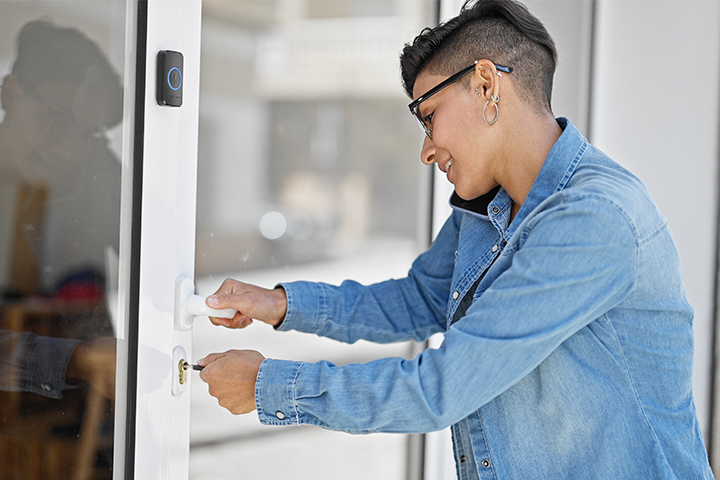
If you have previously given spare keys to a trusted friend, neighbour, or family member, now is the time to call them. Having someone nearby with a spare key can save you a lot of trouble and make it much easier to get back inside.
Look at other doors and first-floor windows
Check if any other doors or first-floor windows are unlocked. You might find an alternative entry point that you can safely use to get back inside without causing any damage to your property. But only do this if it’s safely done!
Check-in on housemates or dependents who may be inside
If you live with others, see if anyone is at home and can let you in. Sometimes housemates or family members might be in a different part of the house and unaware of your situation. Give them a call or knock on the door loudly enough to catch their attention.

4 follow-up steps if you’re still locked out
If you’ve followed our previous tips and you still found yourself locked out of the house with no key, it’s time to move on to these next, slightly more serious measures.
1. Use a plastic card to open your door
In some cases, you can use a plastic card to slide between the door and the frame to release the latch. This method works best on spring bolt locks that aren’t deadbolted. Be cautious to avoid damaging both your card or door.
2. Dismantle the door handle
If you’re comfortable with basic tools, you can try dismantling the door handle. This method can be effective if the lock mechanism is accessible and can be manipulated to unlock the door. Ensure you have the necessary tools and follow any relevant safety guidelines.
3. Call an emergency locksmith
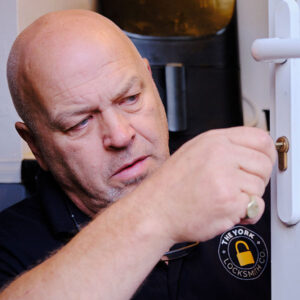
When all else fails, calling an emergency locksmith is the safest and most reliable option. Professional locksmiths have the skills and tools to handle lockouts efficiently without causing damage to your property. York Locksmith Co is available 24/7 to assist you in such situations.
Also, know that you can absolutely change locks on a rental property in the event of an emergency. As long as you contact your landlord and/or tenancy agents to let them know within a reasonable timeframe, it shouldn’t pose a problem. Depending on your lease agreement, you may be responsible for covering the costs of the lock replacement.
4. Break-in as a last resort
Breaking into your own home should always be the last resort. This option can cause significant damage and may be costly to repair. Only consider this if you’re in an urgent situation and absolutely cannot wait for professional help.
What not to do if you’re locked out of the house
We’ve covered everything you should do in the event that you misplace your keys, break them or an intruder has forced entry into your home, but you may wonder “What should I not do when I’m locked outside my house?”
Good question. Here are some final tips.
Panic
While it’s easier said than done, the best bit of advice we can give for renters and homeowners alike is to try and stay calm. If you’re with children or dependents, they will pick up on your worry and this can cause extra distress. A level head will also help you maintain a sense of clarity when thinking through your options and taking the appropriate measures.
Call 999 outside of an emergency
It’s also not a good idea to call 999 outside of an emergency. Unless you’re reporting a break-in or dealing with a genuine crisis such as a fire, you will just be wasting emergency services’ time. If you live in a shared apartment building that has a dedicated security team, they’re a better bet. Along with their number, the first people you should call are
Break into a rental property
Definitely don’t try smashing a windowpane, forcing windows open or breaking down the door if you’re renting – this will in all likelihood hike up the bill by causing extra damage and may result in physical harm. The price of calling in a locksmith will be significantly less than replacing a window, door or repairing damage around the area you broke in.
If you’ve tried everything and can’t get an emergency locksmith to hand, it’s better to reach out to a friend and ask to stay over at their place or pay for a hostel than racking up additional unnecessary expenses.
Risk injury
Re-entering your home by climbing through an inaccessible window or scaling a tall fence in your back garden is never worth the risk of sustaining serious injuries to yourself, especially if you’re thinking about getting onto the roof or climbing up without a ladder. It’s much safer to call an emergency locksmith and patiently wait for them to arrive.

How to avoid lock-out situations in 6 different ways
1. Improve memory aids
Develop a habit of always keeping your keys in a designated spot, such as a key holder or bowl near the door. Consistent habits reduce the chances of misplacing your keys.
2. Install a key safe
A key safe is a secure box mounted outside your home that stores a spare key. Only those with the correct combination can access it, providing a convenient and secure backup option.
3. Entrust a loved one with a spare key
Give a spare key to a trusted neighbour, friend, or family member who lives nearby. This can be a lifesaver in case you lose your keys or lock yourself out.
4. Install superior locks
Investing in high-quality locks that are less likely to malfunction is a surefire way to avoid your keys breaking in the lock mechanism. Ensure that they comply with the BS3621 British Standard, so that your door locks – and by extension your home – are insurable. Regularly maintain them for the peace of mind that they’ll remain in good working condition and reduce the risk of lockouts.
5. Treat your door carefully
Avoid slamming your doors, as this can damage the locking mechanism over time. Gentle handling ensures the longevity of your locks and decreases the likelihood of issues later down the line.
6. Try a smart lock
Consider upgrading to a smart lock system that allows keyless entry using your smartphone or a keypad. Smart locks offer additional convenience and security features, making it easier to manage access to your home.
Parting words
Being locked out of your house is an inconvenience, but it doesn’t have to ruin your day. With the right approach, you can handle the situation smoothly and prevent it from happening again.
At York Locksmith Company, we’re here to help with all your lock-related needs, from emergency lockouts to security upgrades. Don’t hesitate to contact us for reliable, professional assistance anytime you’re in a bind. Stay safe and secure!