We all know the ‘stick it under the plant pot’ and ‘hide it under the doormat’ tricks when it comes to house keys. But so do criminals. That’s why, in recent years, the UK has seen an exponential spike in key safes being installed on homes, rentals, and business premises alike, as savvy consumers are taking extra measures to protect their properties. But how effective are these devices? How safe are key safes?
Whether you heard a news story about one being broken into or you’re simply curious, the purpose of this guide is to lay out the facts. Let me put your mind at ease.
Contents:
- A Reminder: What are Key Safes?
- How Secure is the Average Key Safe?
- Picking an Insurance-Approved Model
- Bonus Key Security Tips
- Conclusion: My Verdict as a Master Locksmith
Getting Everyone Up to Speed: What are Key Safes?
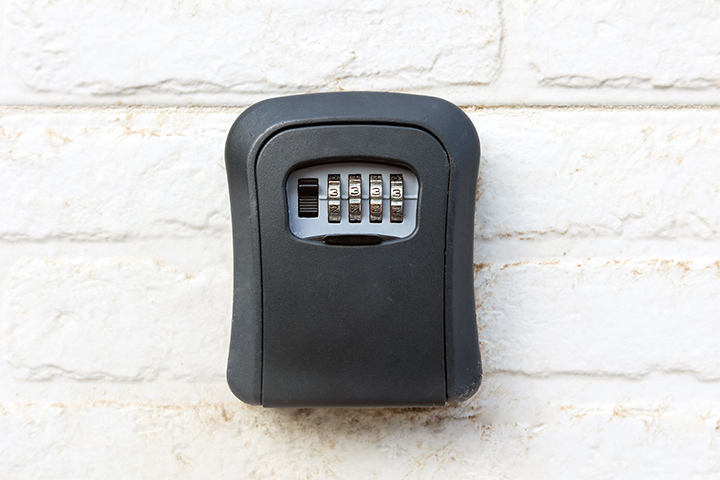
For the uninitiated, key safes are exactly what they sound like – a safe for keys! In practice, that looks like a hardy, tamper-proof box mounted to the wall, harbouring the property’s keys inside or any other key-sized bits and bobs you’d like stowed away inside.
Depending on the brand and model in question, it’ll be made of hard plastic or metal to keep undesirable hands away and, of course, to survive Britain’s cold, changeable weather.
How Key Safes Work
Again, it depends on the model, but most key safes rely on a classic safe mechanism; you have the outer shell as the main layer of defence and then a bolt locking system keeping it tightly shut, which is activated by either a keypad or rotary dial.
Nowadays, though, the options are expanding. Besides the traditional safes, there is an increasing number of smart key safes, tapping into more recent technology – namely, biometric access control (think: fingerprints and facial recognition) and smart codes that can be activated remotely.
Where They Come In Handy
As is to be expected, key safes are super useful across every stratum of society, as they negate those stressful lockout situations and allow non-residents to access the building. That said, there are a couple of use cases I’d like to linger on.
First up, I’d strongly recommend installing a key safe if you have a vulnerable person in your life, particularly if they have carers who need to swing by or there’s a possibility your loved one might experience an accident. I’m thinking of older folks with dementia or disabilities that hinder their mobility. Having a spare set of keys in the event of an accident, secured but quickly accessible, can be a great relief even in stressful circumstances.
Outside of families, another of the most frequent key safe users are Airbnb owners. It makes a lot of sense; after all, it’s one of the simplest ways to manage check-ins remotely. With one of those cutting-edge lock boxes I mentioned earlier, the host can remotely manage self-check-ins without having to make an inconvenient trip to the holiday home. Really, it’s a great way to get a little bit of your freedom back.
Other users who’d stand to benefit from a key box include:
- Tradespeople
- Landlords
- Carers
- Cleaners
- Dog walkers
- Children
How Secure is an Average Key Safe?
With family, valuables and your livelihood all potentially at stake if your keys fall into the wrong hands, a secure key safe is non-negotiable. But how safe and secure is the average key safe?
Well, good news: key safes are generally considered quite secure, and are spades ahead of a mere plant pot or doormat. Do note that a secure key safe comes with some prerequisites…
- It should be installed correctly and in an obscured place (put a pin in that)
- It should be independently certified by a reputable security body, ideally meeting LPS1175 Issue 8 standard or any other ‘Police Preferred Specification’
- It should be in decent nick – i.e., a secondhand key safe showing signs of damage won’t cut it.
Even if your key safe meets all of these requirements, it’s important to recognise that, like any piece of physical hardware, key safes aren’t infallible. Wear and tear pile up over the years; malfunctions do happen.
However, if it’s a traditional key safe with a physical bolt locking system you’ve installed, the latter can be quickly sorted by a trusted local locksmith. With the right tools, they can pick the mechanism and retrieve your trapped keys in a jiffy, so it’s not all doom and gloom – just something to be aware of.
Not All Key Safes Are Made Equal
Speaking of malfunctions, not all safes are made equal. Some models are made from much higher-grade materials – for instance, steel always trumps flimsy plastic – and the locking mechanisms aren’t always on par with each other, some even presenting a risk of break-ins.
That’s why I always urge my customers to do their research before investing in any door lock hardware. Positive reviews and British Standard kitemarks should be your guiding star.
Why Visible Key Safes Aren’t Always the Best Option
So, you’ve ticked all of my suggested security boxes thus far. Great. But that’s not all: you’ve thought about what you’re installing, but what about where?
Well, going back to the sorts of people who tend to have key safes, it’s crucial to bear in mind that criminals may interpret a lock box as a sign of vulnerability, not to mention easy pickings if it looks flimsy and easy to crack into. Indeed, if the recent spates of key safe burglaries in Knaresborough and Nottingham are anything to go by, it seems to be a growing niche for petty criminals.
It’s exactly for this reason that the police advise against placing your key safe right next to the front door. Instead, it’s best practice to pick something a little more obscure. For instance, you could pop somewhere only visible from a certain angle or only if you know where to look. On the wall behind a garden bench, shed or concealed by a pot of strategic shrubbery are all great options.
Making Sure You Pick an Insurance-Approved Model
“How does this affect my home insurance?”, plugged-in readers might be wondering. Well, that entirely depends on the specifics of your contract, so you’ll need to dig through those Ts&Cs.
As with insurance-approved door locks, some providers might require a certain make or model. With others, a key safe might void your home insurance entirely. But as any informed lock specialist will tell you, there are a few commonalities across providers.
As a rule of thumb, always inform them about the installation, check if your contract requires it to be installed professionally, change the code periodically, and follow the necessary maintenance to keep the key safe in good nick. This way, you’ll be in the best position to receive compensation for future claims.
Further Steps You Can Take to Bolster Your Key Security
Like any home security measure, key safes are infinitely more effective when they’re taken out of isolation. Pairing them with other safeguards seriously increases the deterrent factor that prevents would-be trespassers from trying their luck in the first place. Here’s a non-exhaustive list of some of the simplest ones:
- Hide your key safe from general passersby
- Avoid guessable strings of numbers (e.g., 1234) as your code
- Install motion-activated security lights, alarms or CCTV
- If you have a key safe you don’t use, keep it open to remove temptation
- Put a neighbourhood watch sign or sticker in the window
- Keep valuables in your home hidden from view
My Verdict as a Seasoned Master Locksmith
So, how safe are key safes? The long and short of it is that, provided it meets the right standards and is made by an insurance-approved brand, secure as your front door.
As my motto goes, criminals are looking for the path of least resistance. So, the more effort you put into deterrents, the safer your key safe will become. After all, from their perspective, the time and energy it takes to physically break into one of these devices is much better spent hitting multiple homes with weak entry points – i.e., open windows and doors.
So, what’s the verdict? Key safes are a robust and handy piece of kit, which are vital to members of the community. Just make sure they set up properly and looked after well; then, you can’t go wrong.
Ready to take the next steps toward bolstering your home security? Check out my previous blogs on window security and door lock maintenance.