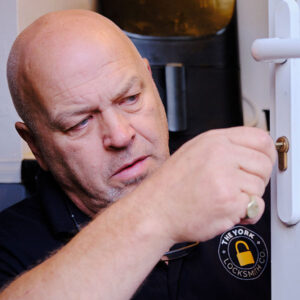
While DIY lock repairs aren’t always advisable to the general public, one thing I can get behind as a professional locksmith is educating yourself on basic lock maintenance. Where’s the best place to start, you ask? Well, that would be learning how to go about lubricating a door lock properly.
With a touch of TLC every now and again, you can keep your lock mechanisms nice and smooth whilst reducing some of the wear and tear through friction and rust. And, as you’ll find out, I’ve got a few myths to counter along the way…
Let’s get a move on.
Skip to:
- Why Lubricate Your Door Locks?
- How to Lubricate Door Locks: The Dos & Don’ts
- Conclusion: Prevention is Better than Cure
Let’s Rewind: Why Lubricate a Door Lock in the First Place?
Whenever I’m called out on a job that requires a complete lock replacement, I always make sure to give the new locks a dash of lubricant once they’re installed – the reason being that it adds a lot of life to the lock, making the whole experience of opening and closing that door much more fluid.
While, of course, this is best practice when you’re changing locks, there’s much more to gain from casual lock maintenance like this – perks that I find many tenants and homeowners alike aren’t privy to. Yes, many people aren’t even aware that locks need upkeep in the first place.
3 Benefits of Routine Maintenance
It’s simple logic: your front door is your home’s first line of defence, a barrier only as secure as its lock. What many people don’t know, however, is that in skimping on the maintenance, you’re missing a serious opportunity to extend the hardware’s lifespan.
1. Avoid Tricky Lock-Out Situations
If you leave your locks to their own devices, without any intervention, you can expect their performance to gradually decline as grime builds up inside the mechanism.
When left for long enough – perhaps yourself and the previous owners of the property have both neglected maintenance over the years – you might unwittingly invite a lockout incident by trying to force the lock in the mechanism and break the key in the process.
By treating your locks with care and using a suitable lubricant, it’s simple to mitigate these issues, ensuring that any debris is flushed out before it poses a problem.
2. Enhanced Security
Although, nationally, break-ins are on the decline, you can never be too careful – particularly as convictions are so low, sitting at 3% country-wide. In my locale, North Yorkshire, urban areas like York are most targeted, which makes burglary prevention a serious concern for city dwellers.
When the majority of them are committed through insecure entry points, the rationale behind lubricating a door lock is clear. In reducing friction with the lubricant, you prevent parts from grinding against one another, which contributes to wear and tear. There’s also the element of corrosion resistance; by applying anti-corrosive treatments, safeguarding the exposed metal from rust is very straightforward. Combined, your doors are way more secure – and a stronger deterrent against trespassers.
3. Save Money via Preventive Care
This ties into the previous point. Better protection against wear and tear equals long-term cost savings. One, because you’re addressing potential issues early, which will help you dodge the cost of an emergency lock repair. And, two, because TLC can extend the life of your door locks, thereby shrinking the rate of replacements over time.
If that won’t convince you to maintain those locks, I don’t know what will!
How Often Should You Lubricate Your Door Locks?
You’ll get different answers to this question, depending on who you ask. Some homeowners swear by lubricating their door locks every 1-3 months, while others who’d call it overkill stick to once a year, or whenever the key meets a little resistance.
As a master locksmith, I’d recommend lubricating your external door locks every 6 months. This way, you’ll avoid an unwanted build-up of gunk that could get your key stuck in the lock, and you can time it with the clocks going back, so you don’t forget this twice-a-year chore.
This said, if you start to feel stiffness or get a ‘crunchy’ feel to the lock mechanism, it’s worth doing some pre-scheduled maintenance to troubleshoot the common issues as early as possible.

How to Lubricate Door Locks: The Do’s & Don’ts
Finally, the practical stuff: how to lubricate a door lock, the right way. Here’s my industry-approved method that I use on the daily when sorting out my customers’ locks.
Step 1: Select the Right Lubricant
First on the agenda is selecting the right lubricant for the job. Here, I find that many people – especially older folks – tend to go for WD-40, but if you want optimal performance, I’d advise against it.
Liquid lubricants like WD-40 or oil-based products are sticky and clump together, attracting dust and debris, which ultimately blocks up the lock again.
Instead, try a dry graphite powder or a trade-approved product like GT85 – you can pick them up in most DIY and hardware stores like B&Q for a reasonable price. They come in a spray can with a specialised nozzle that allows you to get the stuff directly in the keyhole.
If you’re uncertain as to which product to pick, you can always check out what the manufacturer of your lock says online or browse customer reviews.
Do: Pick a high-quality, graphite lubricant that specifies its use on door locks.
Don’t: Just go with WD-40, which can make your locks gummy, clogged and tricky to use.
Step 2: Insert it Into the Lock
This next step can get a little messy, whether you go for a graphite powder or a PTFE spray like GT85, so don’t forget to don your gloves or put a rag down.
With graphite powder, there are two ways of getting it inside the lock mechanism. A) You can gently squeeze the tube of product directly into the keyhole, or B) you can pour a small amount onto your key, ensuring it gets into the grooves or indents, and insert it into the lock to get it in there.
With a multipurpose spray cleaner, like GT85, you can spray directly into the keyhole using the little plastic straw in the nozzle. A few bursts will usually suffice, but you may need to use more if it’s especially sticky.
Do: Use a small amount of lubricant, equivalent to a few short bursts from a spray bottle or a thin layer across one side of your key.
Don’t: Forget to cover any areas you want to keep clean with a paper towel or some rags to save you on cleanup.
Step 3: Distribute the Product Throughout the Mechanism
To ensure the lubricant reaches the pins and other internal components of the lock, you’ll want to insert the key and give it a few turns. This makes sure the product is properly distributed and that you’re using it to the fullest.
Do: Turn the key backwards and forwards a few times.
Don’t: Neglect to apply more if your key is still stiff in the lock after working in the product.
Step 4: Follow-Up Checks & Troubleshooting (If Required)
Finally, it’s time to check everything is in good working order. If you’ve worked in the lubricant properly, you should feel the mechanism start to ease up and your key move more smoothly; however, in the case of no improvement, it’s a good idea to quickly check for other issues.
For instance, if your door won’t lock, that could be a sign that something is wrong with the alignment. In fact, a huge chunk of the failures I see on call-outs are due to the door dropping. It’s not uncommon for a homeowner to drench a stiff lock in WD-40 and continue to use it as the mechanism becomes trickier and trickier to use, eventually damaging the lock beyond repair when all that was needed was a slight adjustment.
Do: Carefully check for issues with the door alignment, your key and strike plates before going overboard with the lubricant.
Don’t: Force the lock after treating it with product; you might end up causing more damage. Here’s it’s best to get the professionals in.
Conclusion: Prevention is Better Than Cure
The moral of the story is that prevention is always better than cure. It’ll save you money in the long run, save you the stress of being locked out in the cold, and generally improve the security of the most vulnerable entry point of your home.
Remember: little and semi-often is best. Pick an industry-approved graphite powder and only insert a small amount into the mechanism.
If you’re after more practical tips from someone with decades of experience in locks and security, explore the rest of my blog. Or, if your door lock still won’t budge after some lubrication, give me a shout and I can get you sorted out in a jiffy – that’s a promise.