We locksmiths are always saying that the first line of defence for any home is a good lock. It’s a cliché for a reason: ADT’s 2025 Burglary Report found that doors were involved in 77% of burglaries, with locks being forced in 27% of cases across England and Wales. Usually, the culprit is a subpar lock making burglars’ lives far too easy. Fortunately, fending them off is made simple with the right hardware. But with a mind-boggling spread of options, which types of locks should you prioritise for your doors? And, what do the security professionals recommend?
Well, that’s exactly what I intend to cover in this guide. With 15 years in the industry and then 10 more as a master locksmith, you could say that lock mechanisms are my special interest.
So, here are my lockset suggestions for external doors that combine practicality, security and a smart aesthetic, along with reasons why you might choose them. I’ll even throw in some additional measures to help you strengthen them further.
Skip to
- Quick Glance Overview
- The Anatomy of Door Locks
- Door Compatibility
- What are the UK’s Most Common Door Locks?
- Additional Door Lock Improvements
- Conclusion
Quick Glance Overview
In a rush? Aren’t we all… Pore over this table for all the essential details, no fluff attached.
| Type of Door Lock | Commonly Used On | How It Works | Best For | |
| Mortice Locks | Timber doors | Fitted into a pocket cut into the edge of the door, with a bolt that secures into the frame. | External timber doors and traditional properties. Look for BS 3621-compliant options where appropriate. | |
| Multi-Point Locking System | uPVC, composite and some aluminium doors | Secures the door at several points along the frame, often using hooks, bolts and rollers operated by the handle. | Modern external doors where multiple locking points provide added resistance to forced entry. | |
| Euro-Cylinder Locks | uPVC, composite and aluminium doors | A removable cylinder operates the locking mechanism and can usually be replaced separately from the rest of the lock. | Multi-point locking systems. For external doors, consider a TS 007-rated anti-snap cylinder. | |
| Rim Automatic Deadlatches | Timber doors | Surface-mounted on the inside of the door and automatically latches when the door closes, with a key-operated cylinder outside. | Front doors where convenient automatic locking is required alongside suitable additional security. | |
| Deadbolt Locks | Timber and some internal doors | Uses a solid bolt that is manually extended into the door frame rather than spring-loaded. | Supplementary security, although standalone deadbolts are less common on UK domestic front doors than some other lock types. | |
| Slam-Shut / Heritage Locks | Timber and traditional-style doors | Automatically secures the door when it closes, typically combining traditional styling with modern locking functionality. | Period properties and homeowners wanting convenient automatic locking without compromising a traditional appearance. | |
| Switch Latches | Timber, uPVC and composite doors depending on the system | Allows the user to switch between different latch or locking functions, such as automatic latching and hold-back operation. | Doors where greater control over how and when the latch engages is useful. | |
| Night Latches | Timber doors | Mounted to the inside face of the door and uses a spring-loaded latch that engages automatically when the door closes. | Front doors, often alongside a mortice lock for additional security. | |
| Padlocks and Cam Locks | Gates, sheds, cupboards, lockers and cabinets | Padlocks use a removable shackle, while cam locks rotate a metal arm behind a door or panel to secure it. | Lower-risk applications, outbuildings, storage and internal cabinets rather than primary household entrance doors. | |
| Smart Locks | Varies by lock and door type | Uses electronic access methods such as an app, PIN, fingerprint, key card or connected smart-home system. | Keyless entry, remote access and households wanting greater control over who can enter the property. Safer when paired with a traditional lock as a backup. | |
The Anatomy of Door Locks
Sorry to walk things back immediately but having a decent understanding of how door locks work is necessary for putting the rest of this guide into context. Especially, when we get into describing and identifying the different types available.
With that in mind, what exactly are the parts of a door lock?
Doors have more to them than first meets the eye; they contain several visible and hidden, internal components. As a general rule, though, they have 3 main parts…
- The body, sometimes referred to as “the cylinder”, where the key is inserted. While not every lock type incorporates cylinders, if it’s reliant on a key, the hardware will feature a comparable mechanism you turn to activate the other lock components.
- The bolt, used to hold the door in the frame when the lock is closed.
- The strike plates, which sit nestled in the door frame ready to grasp the bolt when it’s moved into the locked position.
Of course, this is a bit of an oversimplification, but hopefully this bite-sized explainer has everyone on the same page.
Door Compatibility
To save you some reading, let me whisk you through everything you need to know about door/lock compatibility.
Again, it’s a trio we’re looking at. In the UK, doors are typically made from the following materials.
- Timber doors: Among the most secure front doors, I don’t need to tell you that wood is classy as it comes. It’s also compatible with mortice deadlocks, mortice sash locks and night latches (A quick aside: you’ll want to use the latter in combination with other locks for adequate security, though).
- uPVC doors: Popular on 80s builds like those I regularly visit in Selby or Huntington, uPVC doors are the reason multipoint locking systems are so widespread in the UK. Working in conjunction with Euro cylinders typically, they offer the reassurance of very high security and are very easy to replace DIY.
- Composite doors: Compared to uPVC doors, these doors are significantly sturdier, albeit at the cost of a heftier price tag. They work with Euro cylinders driven by multi-point locking systems, slam-shut (AKA heritage) locks, as well as switch latches.
What are the UK’s Most Common Door Locks? 8 Key Examples
Now you’re up to speed with the terminology, it’s finally time to dig into the options. These 8 common door locks are made to rigorous standards and provide suitable security for property entry points, whatever the DNA of your home.
Meaning? You guessed it, they’re tested against all of the usual forced entry techniques like bumping, picking, snapping and so on. As a result, you’ll find many of the following in the list of insurance-approved door locks on your home cover’s Ts&Cs. If in doubt, though, always check.
Now, no more faffing around, here are the popular door lock types you’ll want to choose from when upgrading your hardware.

1. Mortice Locks
Mortice locks are installed on the edge of the door, with only the keyhole and faceplate visible, instead of the locking mechanism. You’ll often see a mortice deadlock installed on wooden doors, and in both domestic and commercial settings.
Within the mortice lock category, you’ll find both mortice deadlocks and mortice sash locks. To easily differentiate the two, remember the following:
- Mortice deadlocks are key-operated bolts
- Mortice sash locks are the same, but also feature a lock or catch section operated by the door handle.
These types of locks are available as either 3 or 5 lever models; the more levers, the more robust the hardware. So, the five-lever mortice deadlock provides better protection, which is why it typically comes with the British Standard BS3621 kitemark that many insurance policies insist on. As such, it’s a popular choice for exterior doors.
Pros
- Most models are British Standard rated, keeping you home insurance-compliant.
- More difficult to copy keys from and break into than other types of locks, being drill-resistant and anti-pick.
- Mortice locks are an elegant and unobtrusive addition to pretty much any front door.
- Easy to install and can be fitted in a matter of minutes by an experienced locksmith.
Cons
- Can’t be installed on doors with a thickness of less than 35mm.
- Mortice locks are more difficult to rekey than other kinds of door locks and can be tricky and/or expensive to retrofit.

2. Multi-Point Locking Systems
Commonly seen on uPVC and composite doors, multi-point locking systems feature at least three locking points. These points work together to create a strong locking mechanism, often activated by lifting the door handle. Once you have these points engaged, you can then turn the key to keep the door securely closed.
Multi-point systems extend from the bottom to the top of the door along the frame, giving added protection against brute force entry – exactly what you need to protect your personal space and loved ones.
Pros
- One of the best options for uPVC and exterior doors on modern homes.
- Provides multiple locking points along the door frame, making the door more resistant to forced entry than relying on a single locking point alone.
- Recognised by insurance companies thanks to its functional load bearing and durability.
- The lock itself is located in a gearbox, so can be replaced independently of the multi-point locking system.
Cons
- May cost more than traditional single-point locks.
- Old models are prone to mechanical problems.
- Not recommended for DIY installation.

3. Euro-Cylinder Locks
Euro-cylinder locks, also known as barrel locks, or “pin tumbler locks” as they were patented in 1805, are another widespread lock for internal and external doors. They are simple to change, coming in double cylinder, single cylinder and thumb turn varieties.
Double cylinder Euro locks are operated by a key on both sides. Single cylinders, though, usually only require a key on the external side, making them suited to applications such as garage doors where only external (un)locking is required. Thumb turn cylinder locks refer to designs that can only be accessed with a key from one side; on the other side, a knob is used to open the door without one.
All types of Euro cylinder locks, however, function in the same way. Containing a number of pins that press up against the serrated edges of the key when inserted, they can detect the correct pattern for unlocking.
Pros
- You can tailor the level of security to you by picking a 15-pin variety over a 5-pin variety.
- Modifiable to withstand snapping, picking and drilling.
- Easily replaced in 5 minutes, no technical knowledge or experience needed!
Cons
- Unreinforced cylinder locks don’t offer the same level of security against break-ins when compared to mortice locks or multi-point locks.
- Single cylinders can be more vulnerable to break-ins as intruders could break a nearby window, reach in and activate the thumb turn mechanism from the inside.

4. Rim Automatic Deadlatches
The rim lock is the oldest type of door lock around. You might have heard them being referred to as a “box lock” because, well, they look like a box.
Rim automatic deadlatches are often fitted on the inside surface of the door, operating with a key from the outside and by hand from the inside. A rim lock provides security by locking as the door closes and can often be used in tandem with other kinds of door locks for added protection.
Pros
- Rim locks enhance the character or historical appeal of period homes.
- Suitable for doors where it’s not possible to install a mortice lock and internal doors that need privacy (think: bathrooms and bedrooms).
- Incredibly easy to fit.
Cons
- Not all door jambs/surrounds will allow the fitting of the rim lock keeper.
- Provide lower levels of security compared to other types of locksets.

5. Deadbolt Locks
Deadbolts can be operated by a key from one or both sides, manually operated by a turn and release mechanism. This simple lock bolt is fitted into the door and has a hole for the mortice bar of the thumb turn. They don’t use a spring, so will not lock the door upon closing like the previous type discussed.
Most commonly found on internal doors in offices and other places of work, they offer moderate security but not enough for an external door.
Pros
- Suitable for internal rooms such as bathrooms or bedrooms.
- They have an easy installation process.
Cons
- Deadbolts might raise safety concerns in the case of emergencies as a key is required for exiting from the inside.
6. Slam-Shut / Heritage Locks
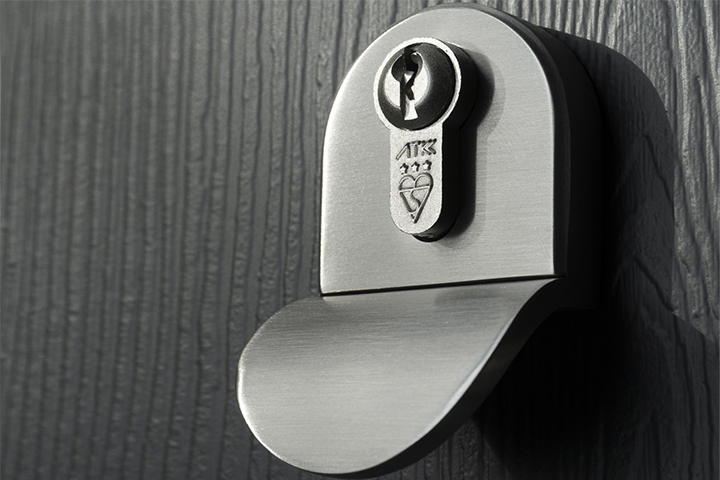
As the name suggests, this type of door lock automatically goes into locked mode when the door is shut. This simplicity is thanks to its sophisticated setup: an instant locking system comprised of independently operating hooks, which are activated by a magnetic sensor and engage the lock when the door latch and the keep touch.
Pros
- Combines traditional styling with modern functionality.
- Many slam-shut lock systems have customisation options.
- Convenient locking that saves the fussing when leaving the home.
Cons
- More expensive to purchase/install.
- Likewise, repairs are trickier.
7. Switch Latches
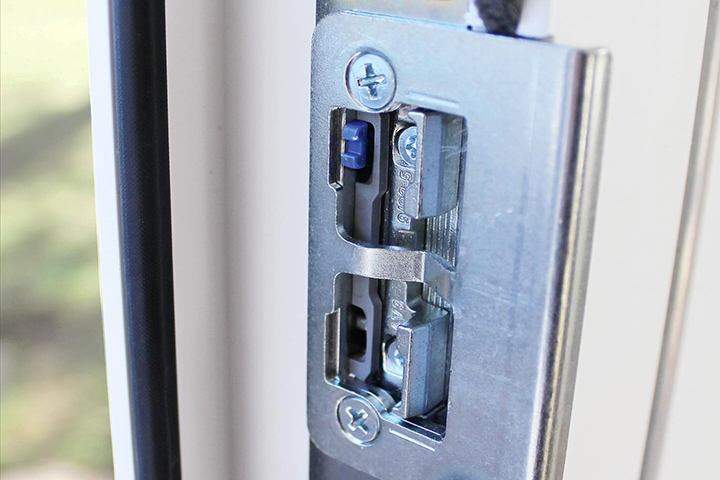
A clever mechanism, switch latches allow the door to be kept temporarily on the latch, when you’re quickly popping out into the garden to water the plants or take out the bins. All you have to do is flip the tony switch sitting at the centre of the door frame to (dis)engage the operation. Ideal for timber, uPVC and composite doors that you’d otherwise prop open with a box or the like.
Pros
- Super convenient for quick closing.
- The latch prevents open doors from slamming in the wind.
- Pairs well with other lock types.
Cons
- More specialist, so a challenge for DIYers to fix.
- Not one for your primary lock, since security is lower.
- More expensive than more traditional locks.

8. Night Latches
Night latches (Yale locks) are a subsidiary type of rim lock that are operated from the exterior side of the door by a key and from the inside by a knob. You can usually find them on front doors, and they are mounted to doors that open inwardly and on the inner surface of the door.
The most secure night latch would be an auto-deadlocking design, which would mean that the door automatically throws the bolt into the door frame, keeping it securely closed.
Pros
- Provides simple security that has been proven to be effective for a long time.
- Deadlocking night latches will allow you to disable the handle from working inside, which is handy if the property is vacant.
Cons
- A standard night latch (non-BS 3621) isn’t secure enough for a front door alone, so it must be fitted alongside a 5-lever mortice deadlock.

9. Padlocks
Padlocks are mobile, attachable locks – but you already knew that. But what about their security credentials? Well, that depends on the specific design and locking mechanism, some of which provide thieves greater purchase for breaking them.
There are two main types of padlocks: combination and keyed. Keyed padlocks are further available in several subtypes, such as keyable, keyed alike and keyed differently. To ensure adequate protection, you should look for CEN ratings upwards of Grade 3.
Pros
- A good extra measure against theft or unwanted entry into outbuildings, such as garage and shed doors, for example.
- Portable, easy to use and move, they are extremely simple.
Cons
- Require fittings on a door to attach to.
- Should never be relied upon as a sole layer of protection, since a bolt cutter or angle grinder can defeat them in minutes.
- Some models are fiddlier to unlock compared to a standard lock type.

10. Smart Locks
The demand for smart, electronic locks has surged in recent years as the technology has become more accessible and public knowledge of it widespread; this is without even touching the exponential rate at which AI had evolved in the last 5 years.
A smart lock is a smart home device that uses Wi-Fi or Bluetooth technology to allow users to lock and unlock doors with the tap of a finger or a voice command, eliminating the need for traditional keys.
They’re a relatively new and evolving technology that can be controlled via an app and monitored in real-time, making the experience highly adaptable and exceptionally convenient.
Pros
- Can be fitted to any usual door type, provided it’s in good nick.
- Syncs with other smart devices, including video doorbells, smart assistants and your phone, plus broader smart home systems.
- Virtually monitor and tweak access codes and entry options, from afar.
- Unlock doors remotely, giving friends, family, contractors or holiday clients access when they need it.
- No keys to worry about losing.
Cons
- Smart locks are on the higher end of the pricing scale.
- They aren’t impenetrable and can be at risk of hacking, bugs or battery failures.
- Often require a traditional lock as a backup.
What Other Kinds of Door Lock Improvements Can Help Protect My Home?
These days, my clients – homeowners, Airbnb hosts, landlords and small business alike – are more dialled into security than ever. Most don’t stop at a quality door lock, the business owners especially. If you find yourself in the same boat, you might consider adding:
- Supplementary deterrents, including stickers, signage, security lighting or CCTV
- A night latch in addition to your primary locking mechanism
- Models that embed the locking mechanism in the doorknob (for secure internal doors)
- Upgrading your window and patio door locks alongside the doors to bolster security
- Padlocks on outbuildings, for example, a strong shackle padlock to prevent entry to sheds and garages
- A master lock access control hierarchy for your keys…
- … Or getting you back and front door keyed alike
- A LPS1175 Issue 8 standard key safe as a backup in case you lose the keys and get locked out
- Alarms, motion detectors, physical personnel and/or proper access control systems, in the case of business offices.
These extras ought to take your protection up a notch, or several, provided your underlying primary locking method is up to snuff. In my experience, this deeper peace of mind makes the cost of a locksmith more than worth it.
Conclusion: It’s Over to You
Whichever lock you choose, its primary goal should be to prevent break-ins. For that reason, I advise you to go beyond the minimum protection standards; look out for the British Standard kitemarks, pick something with Sold Secure Diamond or Gold ratings, explore expert reviews, and compare what buyers had to say about each model.
While I can’t make the final decision for you, if you do need help narrowing down your options of door lock types or related accessories, I’m your guy. You’re welcome to get in touch with any questions.