When you’ve changed a lock in the past, you might’ve stumbled across locks claiming to be ‘anti-snap’, ‘anti-pick’ or ‘anti-bump’. The former two are self-explanatory. But the latter might conjure some odd imagery in your mind; someone giving the hardware a gentle boop. Strange… So, what is bumping a lock? And what should the average homeowner know?
Here’s a zero-fluff overview from your trusted master locksmith at the York Locksmith Company.
Skip to:
- What is Lock Bumping?
- A Brief History
- The Mechanics of Lock Bumping
- Who’s Most at Risk?
- Ways to Protect Yourself
- Conclusion
So, What is Lock Bumping?
Lock bumping, like lock snapping, is a commonplace forced entry technique used to break into pin tumbler locks. Unlike the snap method, bumping requires a specially crafted ‘bump key’ otherwise called a ‘rapping’ or ‘999’ key, to do the deed.
The idea is simple: insert a bump key configured to the target lock’s internal pins, turn it with a bit of applied pressure, et voilà, you manipulate the mechanism to open.
What many homeowners aren’t aware of is the ease and speed at which this occurs. It’s silent, swift and simple enough for a 12-year-old to do (and they have!).
Cool, But Where Did It Come From? A Brief History on Key Bumping
Lock bumping first arrived onto the scene in the USA, 1928, when H.R. Simpson patented the first bump key or ‘rapping key’ as it was first known. Similar technology was developed by Danish locksmiths in the 70s, but it wasn’t until the early 2000s that bump keys became more widely available and, consequently, on the radar of security professionals.
Fast forward to today, and bump keys are increasingly easy to get hold of. You can purchase them online in sets of up to 10 – alarmingly, giving people easy access to swathes of common tumbler locks.
The Mechanics of It All: How Lock Bumping Works
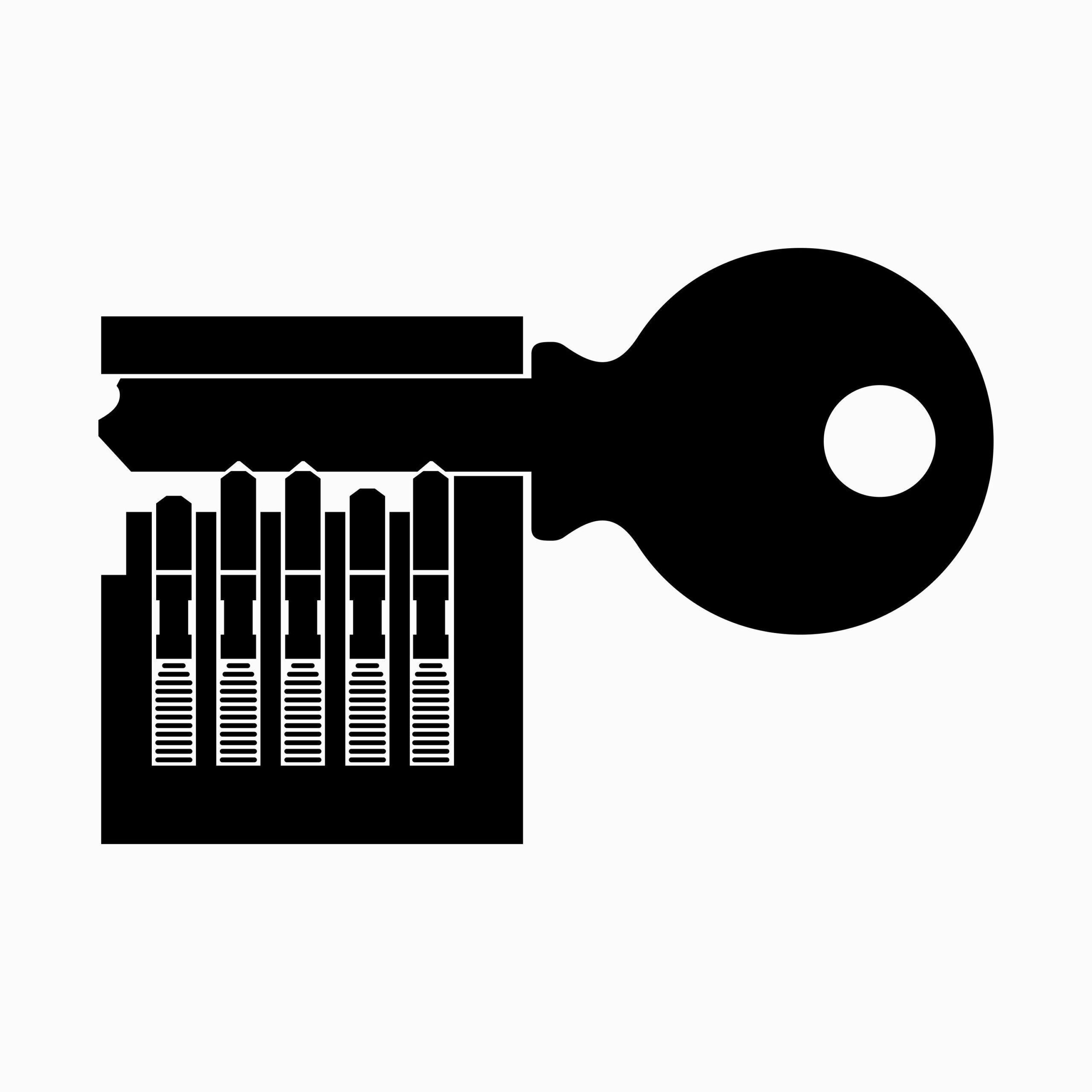
At a mechanical level, lock bumping exploits the pin tumbler setup, using it against itself. It does so by briefly transferring energy from a specially shaped “bump key” to the correspondingly shaped pins within the mechanism, which when triggered rotate the lock for a tiny fraction of a second.
How a normal pin tumbler lock works
A typical cylinder lock contains:
- A plug (the part that turns when you use the correct key).
- A surrounding housing.
- Several stacks of pins (usually 5–6), each consisting of:
- a key pin (bottom),
- a driver pin (top),
- and a spring above them.
When no key is inserted, some of the driver pins straddle the boundary between the plug and the housing (AKA the shear line), preventing the plug from turning. When you insert and turn the key, those pins align with that shear line, allowing free rotation.
What lock bumping takes advantage of
Lock bumping relies on the fact that the pins can briefly move independently when struck. So, when an intruder uses their bump key – applying a quick impact along with steady turning pressure – a short impulse runs through the lower pins. Like one ball striking another in a Newton’s cradle, much of the energy is transferred to the upper (driver) pins.
For a very brief moment everything comes together: the driver pins jump upward, the key pins remain lower, and the shear line becomes temporarily clear. For this split-second window, you can turn the lock into the open position and brute force the door.
Who’s Most At Risk?
In short, anyone relying on an old type of lock with a pin tumbler mechanism. That means euro cylinders, rim deadbolts and some padlocks. Although anti-bump locks are getting better, many dated models (3 to 4+ years) are indeed bumpable. Really, it’s more the design, cylinder specs, certification and wear that are more important than age.
Euro cylinders are the most popular locking mechanism in the world; they’re installed into practically any type of modern residential door, metal, uPVC and composite included. As such, there’s more than a modest chance that there’s one embedded in your own front door.
Regardless, risk isn’t cut and dry. Levels are fluid, fluctuating with location (rural vs inner city), the age of the lock (newer = more robust), the quality of the door itself, and your own personal habits.
Focusing on the latter for a moment, you can seriously decrease the temptation of criminals by stashing your home’s valuables where they won’t be seen. A burglar isn’t going to waste their time on a mystery box property; they want guaranteed goods.
Ways to Protect Yourself or Your Tenants
We talked problems, now let’s talk solutions. Fortunately, there are many, so let’s go over them.
Know the Telltale Signs of Bumping
The frustrating thing about lock bumping is that it rarely leaves explicit signs of forced entry. Yep, it’s pretty sneaky that way. However, there are some red flags to look out for. Namely…
- Indentation on the front of the cylinder
- Small scratches or nicks from the impact
- Wobbly hardware (the relative physical force used to pick the lock in this way can dislodge internal components)
- General functional issues, such as stiffness or your key getting stuck in the lock
Upgrade to Top Quality Anti-Bump Hardware
The best and most immediate security improvement you can make – and I’m saying this as a master locksmith with decades in the trade – is by upgrading your locks to anti-bump grade.
These top-tier locks come with in-built countermeasures to ward off any bump key attacks, and have been lab-tested against these exact measures. Typically, these reinforced cylinders use especially intricate pins or multiple rows of them, which catch if they are forced out of alignment. Some even contain a trapping mechanism, pins that permanently engage and lock the cylinder when tampered with.
My recommendation? Apex or ABS 3-star locks.
One other thing: remember, bumping requires standard key profiles to work. If you opt for something specially cut, with a complex type of key or a busy pin configuration, you put up a strong barrier against picking. In all likelihood, the perpetrator will get tired trying and move on to a more vulnerable home.
Relay Any Concerns to Your Landlord
If you’re renting and you suspect your locks have been targeted with the bumping method, immediately raise the issue with your landlord and/or letting agency. It’s their legal obligation to provide a place safe for habitation and that includes security. There will likely be clause relating to lock maintenance in your tenancy agreement, so be sure to double check the fine print.
If your landlord fails to action your request, there are a few avenues you can explore, which I explain in more detail in our dedicated guide to lock changes on rental properties.
Also, don’t forget, you can always request a lock change after moving in.
Never Rely on Anything Less Than British Standard
This goes with the territory: external locks should always meet British Standard quality and bear the iconic, diamond-shaped kitemark. This signals that its security performance meets UK national standards, making it home insurance compatible and a necessity for compliance in both workplace safety and rental responsibilities.
Do note that home insurance policies vary provider to provider and that British Standard might not necessarily be a catch-all protection. The best course of action is to check your specific policy and go through the Ts&Cs with a fine-tooth comb.
Practice Robust Key Management
How trusting are you with your keys? How many hands do they pass through? These are central questions to safeguarding your home, and even more so, if you’re a landlord or business owner who needs to grant access to external visitors and contractors.
While it’s unlikely, there’s always the risk that one of the keys goes AWOL, and in the wrong hands, it may be that it gets used to source a corresponding bump key. And that leaves the doors quite literally open to theft.
A couple of remedial avenues to explore:
- Master key systems, which bring a tiered dimension to entry authorisation. You could give yourself a universal key compatible with all the locks and then a select few to trusted individuals that work for the relevant doors, which you can key alike for convenience. Instantly, you up the access control.
- Then there’s key safes. These handy pieces of kit allow you to grant key access to contractors and visitors remotely, and if you opt for something particularly cutting edge, you’ll have the power to change the lock box code remotely too. Just make sure it’s LPS1175 Issue 8 Standardfor insurance cover purposes.
Treat Your Doors Well
Wear and tear compounds, so don’t fast forward the process. How? By merely treating your entry points well (no slamming or forcing the lock), and providing a little TLC with an appropriate lubricant like graphite powder, you can extend their lifespan and security performance in one fell swoop. The same goes for windows.
Maintenance? Security? They’re essentially the same thing.
Top Up Your Peace of Mind with Extra Deterrents
Still could do with a safety blanket? Then you’ll love these next tips. As it turns out, university research shows that deterrents in combination are a potent home security measure. Specifically, they found that a mix of quality window locks, door locks, indoor lights on a timer, and external lighting were 49x more protected from thieves than those with no security. Great news for your wallet!
Similarly, business security for offices or studios needn’t be flashy. Whilst you might want to look into physical barriers, if there’s expensive equipment on site, master keying systems, employee awareness, locking down internal storage and even a ‘smile, you’re on camera’ sticker go a long way.
For more guidance, I recommend checking out the official advice from POLICE.UK; there, you’ll find plenty of best practice deterrents and common-sense changes you can implement right now, some at no expense, to make your home safer.
Conclusion: Make Better, Don’t Make Do
Fortunately, UK burglary rates have eroded over the years; the downswing sits at a hopeful 12% decrease on the previous year for personal property.
Nevertheless, that’s no excuse to be complacent. It’s becoming my catch phrase at this point, yet it remains true, criminals won’t wait around for a convenient time. The best time to amp up your security was yesterday, not months down the line. Sorry, sod’s law just works like that.
So, landlords, tenants, businesses, homeowners, it’s time to schedule a British Standard upgrade if you haven’t already. No? Then, take that as your sign to reach out to me, Steve, leading locksmith for York and the surrounding areas.