If you’ve found yourself in a bit of a pickle and your key won’t turn in the lock, don’t worry, many of us have been there. As professional locksmiths who’ve been operating in the York area for the best part of two decades, we’ve seen it all, and when it comes to keys sticking in the door and getting trapped, the problem is a dime a dozen.
But why is this happening, you ask? There are many culprits, common ones being a poorly cut key copy or an underlying issue with the lock mechanism. Fortunately, these issues are pretty simple to spot once you know what you’re looking for and can often be fixed DIY.
As such, this guide is here to set the record straight on stuck keys and stiff locks, starting with an overview of the issue – you’re welcome to skip ahead to whichever section you need most.
PSA: If your situation is an emergency – i.e., you’re locked out and need immediate access to your property – please seek out an emergency locksmith in your area who can help you gain entry, fast.
- A Brief Overview
- Why Your Key Won’t Turn in the Lock
- Diagnosing the Problem
- Step-By-Step Fixes
- Prevention Tips
- Conclusion
Time to get cracking!
A Brief Overview of the Issue
When your locks don’t behave as expected, it’s easy to fall into the panic spiral and catastrophise your situation to all hell. After all, the doors to your home and/or business are the first point of entry to your people, property and personal space – not to mention the first place criminals will try to exploit.
Don’t get us wrong, while it’s absolutely something to be concerned about, this is an incredibly common problem that most of us will experience at least once in our lifetime. And as frustrating and, sometimes, unsettling as it is, there’s much you can do about it.
This said, the exact solution needed will vary with every given scenario and type of door lock; sometimes it’s as simple as lubricating the lock, while other situations call for a complete lock replacement. Therefore, it’s a good idea to troubleshoot the issue before you get a locksmith on the case, particularly if the fix is just a matter of trying a different key or getting new ones cut.
Reasons Why a Key Won’t Turn in the Lock
Your key won’t turn in the lock because it’s met with resistance, maybe the key turns but the lock won’t open, or perhaps the key simply will. not. go into the lock. Whichever resonates most, know that the list of causes is only so long. In fact, it’s safe to say that it will be one of the following…
The Wrong Key
Not to sound patronising, but in the spur of the moment, have you double-checked that you’re using the right key? It’s an easy mistake to make, particularly if you’re dealing with numerous keys or a bunch that look identical. Found it? Score! You can continue with the rest of your day. Still unable to lock or open the door? Then, keep reading.
Worn or Damaged Keys
After almost 20 years in the game as a family locksmith, we’ve seen our fair share of key issues. In fact, we’re willing to bet that a large portion of those struggling with a key that won’t turn in the lock are suffering from a worn or damaged key.
Here, the typical culprit is poorly cut copies of cylinder keys, since they’re duplicated and replaced the most often, because of the popularity of the lock type. The same is true of old keys; over time, daily wear and tear can subject them to rounding, bending and chips, which prevent them from aligning with the lock mechanism and functioning correctly. The upside is that the fix is relatively painless – just get new copies recut from the original.
Weather-Related Issues
Unbeknownst to many homeowners and tenants alike, the weather can actually play havoc with the locks on external doors, however secure they are. Whether composite, uPVC or wood, changing temperatures can lead to a whole host of issues, like warping, expansion and shrinkage of the door and the lock. As you can expect, this can compromise the smooth functionality of the lock, but fortunately, this is fairly rare.
Misalignment, Thanks to the Door Shifting
Another cause that might point to more serious faults is when the latch and strike plates misalign. As we mentioned, warping has a role to play here, but equally, mechanical wear and tear and mistreating the door (slamming it forcefully) contribute to the issue. In this case, you can try a few fixes, which we’ll get more into later, such as making small adjustments to the alignment of the strike plates, hinges or even the door in the frame.
A Jammed Mechanism
When you can’t see any obvious outward problems, it’s a good time to move your attention inwards to the internal lock mechanism itself. Both euro cylinders and mortice deadlocks are susceptible to jamming if they aren’t lubricated over time, gradually building up grime and debris that prevents the key from turning smoothly in the lock. Yep, the culprit here is often a lack of maintenance or general wear and tear.
Internal Part Failures
Last but not least is a faulty lock mechanism, which can be brought on by numerous factors. For one, rust, poor treatment, and general wear and tear may lead components like springs, pins and tumblers to degrade over time, while a low-grade lock might simply not be up to scratch. Likewise, if the lock was installed poorly, or even incorrectly, if it was a DIY job, it can significantly impact its lifespan.
Here, the solution is clear: get that damaged lock replaced with a higher-quality alternative that meets the British Standard for security (BS3621). Spoilers… this is typically when a trained professional should step in.
Diagnosing the Problem with Your Key/Lock
Sometimes a preliminary visual check isn’t enough to identify which of the above issues is plaguing your door lock. Luckily, you can troubleshoot the problem with these simple hacks – you’re welcome.
- Making Sure You’re Using the Right Key: Exactly what it sounds like – double check it’s the correct key in the lock and try a few others if you’re uncertain which one is the right match.
- Checking for Damaged Keys: Does your key look damaged? Bends, bluntness or cracks are indicators that its performance is compromised. Try your spare keys to isolate whether this one is the problem. If it works with another, take it as your sign to get new keys cut from the original.
- Spotting Misalignment: Always run through the following tests before jumping to any conclusions about the lock failing to close securely.
- First, try closing the door slowly and observe whether the latch easily enters the strike plate without resistance.
- Look above and below the lock for signs the door isn’t hanging evenly: gaps, tight spots, or rubbing all suggest poor alignment.
- Try gently lifting or pushing the door inward while turning the key; if it turns with pressure, misalignment is likely the issue.
- Also inspect the hinges and frame for any looseness or wear that might have shifted the door’s positioning over time.
- Checking for a Jammed Lock:
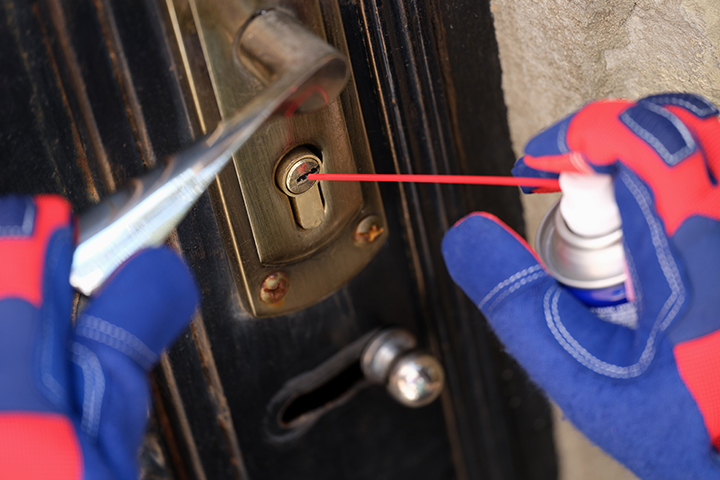
- Test the key gently in the lock after applying an appropriate dry lubricant like graphite powder or WD-40 and see if it loosens up.
- On a cold day, a frozen lock might be the cause, so you could also try heating up your key with some warm water and trying again.
- Feels like there’s still something in there? Then follow our guide to removing broken key bits or phone your local locksmith.
- Ruling Out an Internal Lock Issue: If all else fails, or the key turns but the lock won’t open, then it’s highly likely that an internal part is the offender. Here, you can open up the lock mechanism to locate the problem. Barrel locks are pretty easy to measure and realign, but more complex mechanisms like mortice deadlocks or multipoint locks are best left to the experts. Finally, make sure to avoid tools that could cause further damage – hammers are a no-no!

When Your Key Won’t Turn in the Lock: Step-By-Step Fixes to Try Before Calling in a Locksmith
Once you’ve diagnosed the likely issue, try the following step-by-step fixes to get that lock working. Note that while these are practical, DIY-safe approaches to get you back inside or restore your lock’s function without risking damage, sometimes professional assistance is unavoidable.
Step 1) Don’t Panic
Seriously, take a breath and ground yourself. Jamming your key in harder or reaching for makeshift tools can make matters worse. Most issues are fixable with minimal effort, so keep reading with a clear head.
Step 2) Identify the Problem
Use the diagnosis section above to narrow it down. Whether it’s misalignment, grime build-up, a frozen mechanism or a blunt key, knowing the cause helps you act decisively.
Step 3) Try a Temporary Fix to Regain Entry if Locked Out
If you’re stuck outside the house, your first recourse will be to regain entry safely and promptly. These are your best bets of doing so without having to resort to breaking in.
Locating Spare Keys
Use a backup to rule out a worn or bent key as the culprit. A fresh, undamaged key might turn smoothly and help you realise that it’s not the lock at fault. Here, you can simply get new keys cut from the original, ensuring they’re of better quality.
The Wiggle & Lift Technique
If misalignment is suspected, gently lift or push the door inward as you turn the key. Don’t force it – subtle movement is your friend – and hopefully you can get the mechanism moving.
Once you’re able to get in or know you won’t be trapped inside, you can prop open the door and get to readjusting the plates and/or frame. Usually, this is a matter of tightening the hinges or repositioning them so that the door sits properly in the frame, which only requires a screwdriver and a good eye.
Fixing Blunt or Bent Keys
If your key is blunt, bent, or overly worn, avoid the temptation to try to straighten or file it yourself, as this can weaken the metal and cause it to snap off inside. Instead, only as a last resort should you use the damaged key to gain access; ideally, try our other methods first or call out an emergency locksmith.
Removing a Blockage in the Keyhole
If you suspect debris or a broken key fragment, use a pair of tweezers or pliers to gently pull out the pieces, but only if you can see the blockage and it’s not deep inside. Applying a lubricant is absolutely essential for this process to reduce friction.
Dealing with a Frozen Lock
Frozen lock? Warm the key with warm water (dry it before use!) or gently heat the lock with a hairdryer. Then, try again, and it may loosen just enough to get the door working. In this case, it’s always a good idea to check in with the lock when it’s warmer out to see whether this was the sole issue, as there may have been a combination of faults at play.
Step 4) Repair or Replace What’s Not Working
We have a more comprehensive guide on fixing your door locks, so check that out once you’re done here, but here are the core methods summarised.
Get New Keys Cut
If a spare works but your original doesn’t, it’s time for a recut. Aim for the original, not a duplicate of a duplicate, if you can manage it.
Adjust the Strike Plate or Hinges
Misalignment is often fixable with a screwdriver. Tighten loose screws or reposition the strike plate slightly to help the latch engage properly.
Replace the Lock Barrel (if accessible and simple)
On many doors, euro cylinder barrels can be easily swapped out with a screwdriver and a matching part, which can be found in most hardware stores like B&Q.
Step 5) Know When to Enlist a Locksmith
There are many instances when the help of a qualified locksmith is superior to a DIY job, not least because they possess the skills, experience and tools to achieve superior results. If you don’t feel confident changing the hardware yourself, it’s best to sit this one out, as you may inadvertently damage the lock/key and worsen the problem. Plus, a professional on board guarantees a much quicker fix, and given their knowledge, there’s no risk of paying through the nose for accidental damage or unnecessary replacements. Here are some other scenarios that might call for professional assistance:
- When you’re locked out and have no other means of entry;
- The key won’t go in the full way and your efforts to remove the blockage are futile;
- Your lock requires a more complex fix, especially in the case of dealing with multi-point locks and mortice deadlocks or broken internal parts like springs;
- There’s a security risk or your home has been broken into (check our guide on your next steps);
- You lack the DIY know-how, tools or confidence.
Bonus Prevention Tips to Keep Your Locks Well-Oiled & Working
Before we wrap up here, allow us to impart a few final words of wisdom. By implementing these general tips, you can stave off stiff and faulty locks in the long term and avoid unwanted stress – as they say: prevention is better than cure.
Protect Your Keys
Looking after keys goes a long way as far as stiff locks are concerned. This means ensuring that they are good quality and cut precisely to begin with and avoiding unnecessary damage wherever possible. Yes, the days of using your house keys as a makeshift bottle or letter opener are long gone. Also, remember not to force them in the lock or use them as a ‘jack’.
Keep Your Locks Squeaky Clean
Regular lubrication with a graphite powder or specialist lock solution, usually once every 6 to 12 months, will keep your locks well-maintained and your experience using them a breeze. The idea is to prevent the buildup of grime before it hinders the lock’s performance.
Treat Your Doors Well
This tip is a given: always treat your doors with respect. Not only will your neighbours thank you for it, but preventing unnecessary slamming will reduce your chances of damaging the door, frame or other components, which become loosened and misaligned with all the jostling.
Pick High Grade Locks
If you do all of the above, you’re well on the path to a healthy and durable lock, but here’s one more hack for good measure. By choosing an insurance-compliant or higher-grade lock from a trusted manufacturer, you reduce the risk of mechanical faults and improve your home’s overall security. These locks are built with better materials, tighter tolerances, and more robust internal mechanisms, making them far less likely to seize, stick, or wear out prematurely. Think of it as prevention by design.
Your Key Still Won’t Turn in the Lock? Seek the Help of Your Local Locksmith
If you’ve followed the steps shared above and the lock still won’t budge, consider that a sign to get in touch with your local locksmith. With the winning combo of specialist knowledge and all the right tools at their disposal, they can have the problem sorted in a jiffy – which is much better than forcing it and breaking the key.
Sounds like you? Then get in touch with The York Locksmith Company. We serve the community throughout the wider York area with a friendly yet professional service – and won’t rest until the job meets your satisfaction.